2025 Guide: How Unified Commerce Transforms Restaurant Operations
Connexup Team
Oct 12, 2025
If you run a restaurant in 2025, you’re probably managing more platforms than plates.
Your menu lives on multiple delivery apps, your website, and in-store kiosks. Updates take hours. Orders come from every direction — and by the end of the day, your staff spends more time syncing tablets than serving customers. That’s the reality of modern restaurant operations: fragmented systems, duplicated effort, and plenty of room for error.
The Problem: Fragmented Systems Slow Down Restaurant Operations
Imagine this: a customer calls saying their favorite dish is “unavailable” on one online ordering platform, but your in-store POS still lists it as available. Or your team updates prices on one platform but forgets the others. One small change turns into hours of manual work — and every mismatch creates confusion. The hidden costs of scattered restaurant systems:
Menu updates must be repeated across every channel
Orders arrive from separate platforms, creating mistakes
Inventory, pricing, and reporting never align
The result? Chaos in the back office, frustrated staff, and lost revenue.
The Shift: One Unified System to Manage Everything
A unified commerce platform for restaurants changes the equation. Instead of juggling multiple systems, you operate from one connected backend that manages menu management, order flow, and fulfillment across all channels — online, in-store, and delivery. With a unified restaurant management system, you can:
Update once, sync everywhere: change a menu item, adjust pricing, or mark sold-out dishes, and updates appear instantly across all channels.
Streamline order flow: orders from your website, kiosk, or delivery apps appear in a single queue. No missed tickets, no manual re-entry.
Gain clear visibility: sales data, popular items, and peak hours — all in one dashboard, without messy spreadsheets.
The Payoff: Efficiency, Accuracy, and Insights
When systems are unified, your team regains control. They can focus on delivering great service — not correcting errors. Benefits of a restaurant POS integration and unified backend:
Fewer order mismatches
Faster menu updates
Real-time restaurant analytics to drive smarter decisions
One restaurant we worked with cut their order processing time by 30% after connecting all channels into a single system. The impact was immediate: fewer complaints, faster service, and happier staff.
The Future Is Unified
As restaurants expand into new sales channels, fragmented tools only make operations harder. Unified commerce for restaurants isn’t just convenient — it’s critical for sustainability. It keeps your operations adaptable, reduces staff stress, and prepares your business for future growth. When everything works together, control doesn’t just return — it becomes your advantage.

Connexup: One Platform for Every Menu and Order
At Connexup, we know restaurant tech can get messy fast.
That’s why we built a unified platform that keeps your menus, orders, and channels in sync — automatically.
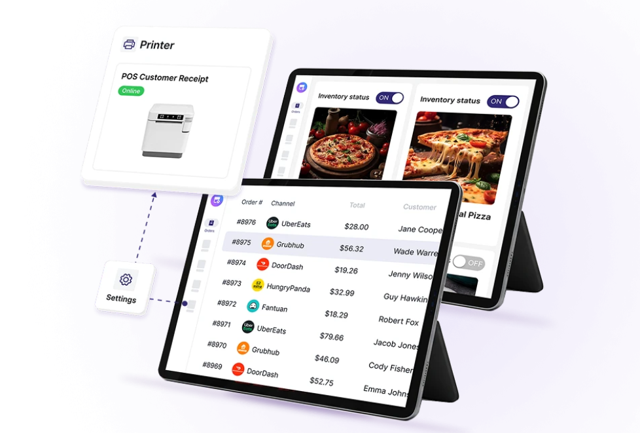
Update your menu once, and it’s live everywhere — your website, delivery apps, even your in-store kiosk.
Every order, whether from DoorDash or your own site, flows into one clean queue.
And because your POS and online channels stay connected, your team always knows what’s in stock and what’s sold out.
Behind the scenes, our system tracks performance in real time — showing you what’s selling, when business peaks, and where to improve next.
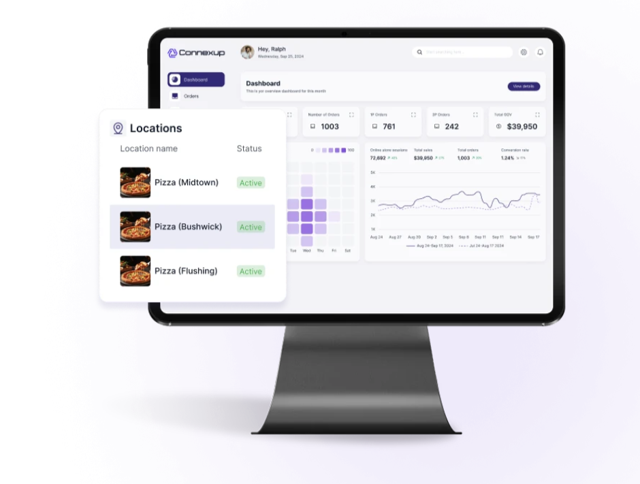
No more switching screens. No more second-guessing.Just one connected flow — powered by Connexup.