How U.S. Hotpot Restaurants Can Improve Guest Education and Ordering
Connexup Team
Nov 25, 2025
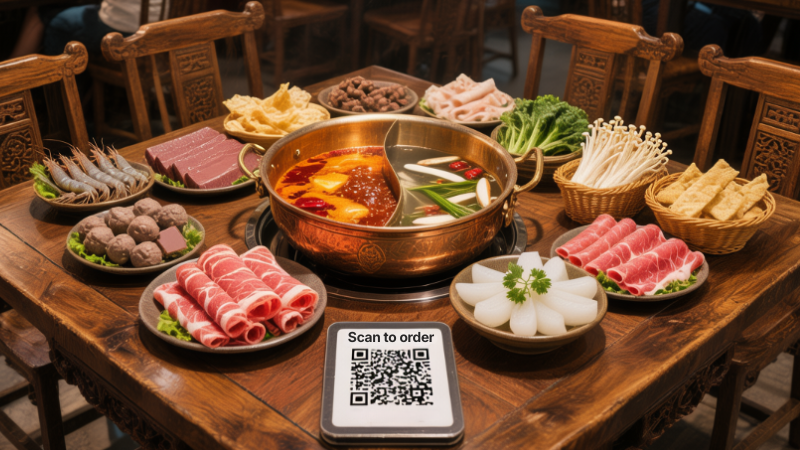
Hotpot is no longer a hidden gem in the U.S. restaurant scene. Over the past three years, searches for “hotpot near me” have surged on Google, and major cities like Los Angeles, Houston, and New York now host dozens of hotpot restaurants. But despite this growing demand, most American diners still don’t fully understand how hotpot works—and that creates real operational challenges.
If you run a hotpot restaurant in the U.S., you probably see the same issues every day:
Guests need help choosing broths, meats, and vegetables
First-timers feel intimidated or confused
Servers spend significant time explaining the process
Group dining makes ordering slow and error-prone
Labor pressure keeps rising while margins get tighter
These aren’t isolated problems. They’re industry-wide. And solving them is key to growing hotpot revenue, improving table turnover, and building a loyal customer base.
Pain Point #1: U.S. Guests Love the Hotpot Experience — They Just Don’t Know How to Start
Americans enjoy interactive dining, but hotpot is still new enough that many feel unsure about the “rules.” According to internal surveys from U.S. hotpot operators, over 60% of first-time guests want guidance before ordering, and nearly half feel overwhelmed by the menu.
That hesitation directly impacts revenue: confused guests order less, eat slower, and are less likely to return.
How to Turn Curiosity Into Confidence
Here are data-backed ways U.S. hotpot restaurants are making the experience more accessible:
1. Short-form social videos drive discovery
Hotpot restaurants using TikTok/Instagram Reels saw up to 30% higher engagement when posting simple “How to Hotpot” clips.
2. Step-by-step tutorials reduce staff load
A clear 60–90 second video on your website can cut repetitive table-side explanations by up to 20–25%.
3. Smart menu recommendations increase average order size
Combos like “First-Timer Set” or digital recommendation engines help guide uncertain guests—and many operators report higher check averages when using pre-built pairing suggestions.
4. First-time guest offers remove the fear factor
Low-commitment promotions (“Starter Sampler for First-Timers”) push hesitant guests to try more items.
5. Clean, visual table-top guides improve flow
A simple card explaining broth → meats → veggies → sauce can eliminate 70% of guest confusion.
6. Local influencers help educate your market
A good “Hotpot 101” video can bring in waves of new diners unfamiliar with Asian cuisine.
7. Micro events help hotpot feel fun, not complicated
Tasting nights, sauce bar demos, or staff-guided “Beginner Nights” help your community understand the dining style.
When you make hotpot feel easy, approachable, and enjoyable, your restaurant becomes the go-to place for Americans trying hotpot for the first time.
Pain Point #2: Slow Ordering and High Labor Pressure Are Holding Hotpot Restaurants Back
Unlike standard U.S. restaurants, hotpot ordering is inherently complex:
Large menus
Many customizable options
Group ordering
Frequent add-ons
Constant server check-ins
In a labor-tight industry, these friction points cost real money. Many hotpot operators report:
Slower table turnover
Higher labor-to-sales ratios
More order mistakes
Guest frustration during busy hours
This is why more U.S. hotpot restaurants are adopting digital ordering tools—especially QR code ordering (also known as scan-to-order or QR code ordering). It’s a simple, browser-based digital menu designed for high-volume dining.
How QR code ordering Solves Hotpot’s Biggest Operational Problems
1. Significant Labor Savings
Guests browse the menu, place add-ons, and submit orders without waiting for a server.
This frees staff to focus on hospitality—not running between tables.
2. Faster Ordering = Higher Table Turnover
Digital ordering shortens the time from decision to action.
Busy weekend nights become manageable again.
3. Fewer Errors, Fewer Refunds
A digital menu means no misheard items, no handwriting issues, no confusion.
Every order is logged cleanly before hitting the kitchen.
4. Perfect for Large Groups
Everyone can order from their own phone.
No more shouting over the table, no more shared paper menu chaos.
5. No App, No Hardware, No Hassle
Just scan and order—100% browser-based.
Works with your existing POS and web ordering system.
6. Real-Time Menu Updates
Sold out of wagyu? Need to adjust a broth price?
Updates take seconds and appear instantly on every table.
7. Built-In Marketing Power
Digital ordering captures customer data and connects with loyalty programs—turning dine-in guests into repeat customers.
For a hotpot restaurant, these improvements are not “nice to have”—they directly affect profit, service quality, and long-term growth.
Hotpot Restaurants in the U.S. Win When Education + Efficiency Work Together
The U.S. hotpot market is expanding fast, but success depends on making the experience intuitive for guests and smooth for staff. Operators who improve both areas are already seeing higher check averages, faster table turns, and stronger customer loyalty.
If you’re exploring ways to simplify guest education and streamline ordering, Connexup’s QR code ordering and smart menu tools are built exactly for high-volume, customizable dining like hotpot.
Connexup makes this possible by combining a clean, visual digital menu with real-time recommendations and a fully automated ordering flow. Guests understand what to order faster, choose confidently, and place add-ons without waiting for a server.
For hotpot restaurants, this means fewer repeated explanations, fewer mistakes, and smoother service even during peak hours. And because all updates happen instantly—from sold-out items to pairing suggestions—you maintain complete control over the dining experience while reducing pressure on your staff.
Ready to streamline your hotpot operations? Connexup can help.