Restaurant Reputation Management in a Google-First World
Connexup Team
Dec 26, 2025
A guest isn’t looking for your restaurant — they’re looking for a place to eat.
It’s 6:30 PM.
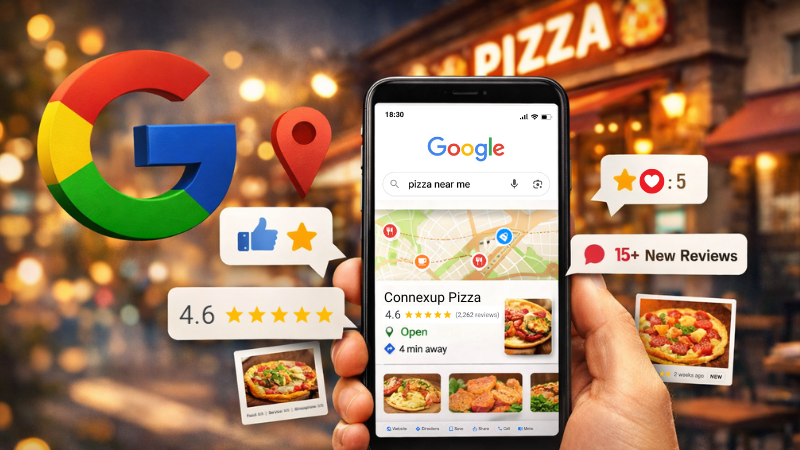
Someone opens Google Maps, types “pizza near me,” and scrolls through a short list of options.
They don’t visit your website. They don’t know your story.
What they see instead are star ratings, recent reviews, photos, and how — or whether — the restaurant responds.
That moment, often lasting less than ten seconds, determines whether your restaurant earns a visit or disappears from consideration entirely.
In a Google-first world, reputation doesn’t start at the door.
It starts at search.
Google Is No Longer Just a Search Engine — It’s the Front Door
For restaurants today, Google isn’t simply a place where guests look up directions or opening hours. It’s where dining decisions are made — often before a guest ever sees a menu or visits a website.
Industry research consistently shows that over 90% of diners read online reviews before choosing a restaurant, and Google remains the most influential platform in that decision process. For many guests, star ratings and recent reviews are the first — and sometimes only — signals they use to evaluate quality.
The impact is measurable:
Nearly one-third of consumers say they won’t consider a restaurant rated below 4 stars.
Restaurants with higher review volume and more recent feedback consistently receive higher click-through rates in local search results.
Review freshness matters almost as much as rating itself — diners are far more likely to trust feedback from the past few weeks than reviews written months ago.
In other words, visibility on Google isn’t determined by brand awareness alone. It’s shaped by reputation signals that suggest the restaurant is active, reliable, and consistently delivering a good experience.
At the moment a guest searches “restaurants near me,” Google Reviews become your introduction — and your filter.
They decide whether your restaurant earns attention, or never enters the conversation at all.
When Nothing Is “Wrong” — But Fewer Guests Show Up
Many restaurants assume review management is only necessary when something goes wrong.
No major complaints. No PR crisis. A decent 4.2 rating.
Yet bookings soften. Walk-ins slow down.
Nothing feels broken.
Often, what’s missing isn’t quality — it’s presence.
Outdated reviews, slow responses, or long periods of silence can quietly push a restaurant down the rankings and out of consideration. In local search, inactivity doesn’t mean stability. It signals irrelevance.
What Restaurant Reputation Management Really Means Today
Reputation management is often misunderstood as damage control — responding to bad reviews and thanking guests for good ones.
In reality, it’s about consistency and momentum:
Staying visible
Staying current
Staying human
It’s the difference between a restaurant that exists online and one that feels actively run.
How Guests Actually Read Reviews
Most guests don’t scroll through dozens of five-star comments.
They look for patterns.
They read recent reviews.
They check how businesses respond to criticism.
They notice tone more than wording.
A thoughtful response to a negative review often builds more trust than a flawless rating.
Silence, on the other hand, suggests indifference.
Trust isn’t built through perfection — it’s built through responsiveness.
Reviews Are Operational Signals — If You Know How to Read Them
Beyond visibility and trust, reviews contain something many restaurants underuse: operational insight.
When similar comments appear again and again — about wait times, portion sizes, staff friendliness, or specific dishes — they point to systems, not isolated incidents.
The problem is rarely a lack of feedback. It’s a lack of structure.
When reviews live across platforms, are handled manually, and disappear into inboxes, patterns get missed. Valuable signals turn into noise.
When Manual Review Management Stops Working
As restaurants grow — more locations, more platforms, more volume — manual review management quickly becomes unsustainable.
Different staff reply in different tones. Some reviews get answered instantly, others days later. Insights stay locked inside individual platforms.
At that point, the issue isn’t effort. It’s scale.
Building a Reputation System That Actually Works
This is where reputation management shifts from a task to a system.
Connexup approaches reviews not as isolated comments, but as connected business data — bringing structure, speed, and insight into one place.
One Inbox, Multiple Platforms
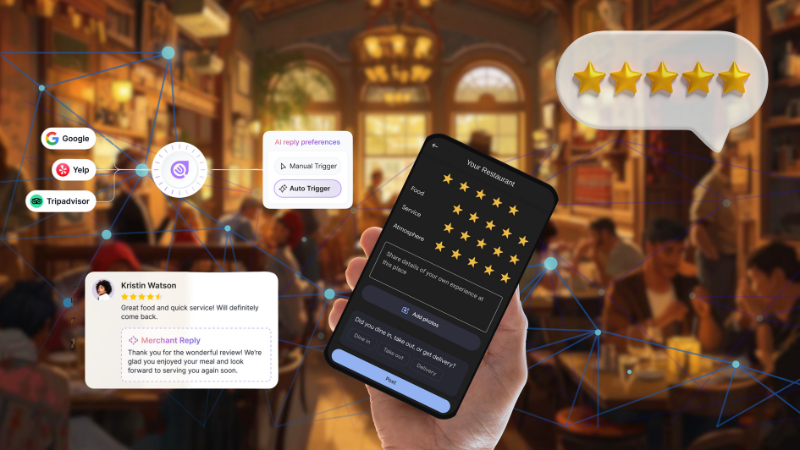
Instead of jumping between dashboards, Connexup centralizes reviews from key platforms — currently Google Reviews and Yelp — into a single workspace. Teams see everything at once, respond faster, and maintain a consistent brand voice across channels.
Full Review Management, Without the Manual Load
Routine responses can be handled automatically, ensuring timely engagement even during peak hours. Critical reviews are flagged for attention, so nothing important slips through. Fast response times aren’t about optics — they directly impact trust and visibility.
AI-Powered Sentiment Analysis & Smart Replies
Connexup’s AI doesn’t just detect positive or negative sentiment.
It understands tone, context, and intent — generating responses that align with your brand personality and your customer base. That means replies sound natural, professional, and on-brand — not templated or robotic.
Regular Reports That Let You Focus on Results
Instead of reading every single review, operators receive clear, scheduled summaries:
Overall sentiment trends
Changes in review volume and ratings
Key shifts that matter operationally
Less time in the weeds. More focus on outcomes.
Deep Insights That Go Beyond Star Ratings
For teams that want to go further, Connexup provides deeper analysis:
High-frequency keywords and recurring themes
Performance comparisons across multiple locations
Review correlations by time of day, rating distribution, and volume
Actionable recommendations tied to menu items, service flow, and staffing
Reviews stop being emotional reactions and start becoming decision-making tools.
Reputation Is Infrastructure — Not Marketing
The next guest who searches “near me” may never visit your website. They’ll meet your restaurant through a screen, a score, and a few lines of feedback.
In a Google-first world, reputation isn’t about chasing more reviews.
It’s about building a system that keeps your restaurant visible, trusted, and improving — long before anyone walks through the door.
You may also want to read our related post:
A Restaurant Website Is No Longer Just for Customers — It Shapes How You’re Found on Google